YouTubeアイコン
ページトップへ

LASIK

What is LASIK?

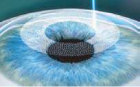
LASIK is a surgery that corrects refractive errors such as myopia, hyperopia, and astigmatism by reshaping the cornea with a laser.

Whereas ICL corrects vision by inserting a lens similar to a contact lens inside the eye, LASIK differs in that it shines a laser on the cornea to change its curvature, thereby adjusting the light entering the eye so that it focuses on the retina, allowing you to see without glasses.
At our clinic, we recommend ICL—which can correct vision without cutting the cornea—as our first-choice option. However, depending on the condition of the eye, there are cases where ICL is not suitable, or cases where fine adjustment of residual myopia or astigmatism remains after ICL surgery or cataract surgery. In such cases, LASIK offers better correction precision, so we may recommend LASIK.

VisuMax
※VisuMax (manufactured by Carl Zeiss): Emits a femtosecond laser to create a corneal flap (a thin hinged cover).
MEL90
※MEL90 (manufactured by Carl Zeiss): Emits an excimer laser onto the corneal surface (stromal layer) to ablate it extremely thinly, thereby reshaping the cornea and adjusting its refractive power.

Indications for LASIK

LASIK is not a surgery that everyone can undergo.

Not only the degree of myopia, hyperopia, and astigmatism, but also the shape and thickness of the cornea and the condition of the eye are examined in detail before determining whether LASIK is suitable.
In particular, because LASIK involves cutting the cornea, the thickness and shape of the cornea are important.
If the cornea is thin, if there is a problem with the shape of the cornea, or if the degree of myopia or astigmatism is high, LASIK may not be indicated.
When ICL is indicated, we recommend ICL as the first-choice option. However, if ICL is not indicated, we will consider a treatment method suited to that person's eyes, including LASIK.

The LASIK Surgery Process

STEP 1: Topical Anesthesia

Topical anesthetic eye drops are administered before surgery.
Because LASIK is performed under local anesthesia using eye drops, you will not feel strong pain during the procedure.

STEP 2: Flap Creation

A femtosecond laser is used to create a thin flap (a lid-like layer of corneal tissue) on the surface of the cornea. The flap is created with the laser while checking the condition of the cornea.

STEP 2: Flap Creation

STEP 3: Exposure of the Corneal Stroma

The created flap is lifted to expose the corneal stroma.
An excimer laser is then applied to this area to reshape the cornea.

STEP 3: Exposure of the Corneal Stroma

STEP 4: Excimer Laser Application

The excimer laser is applied to the corneal stroma according to each patient's refractive prescription, such as myopia, hyperopia, and astigmatism. By precisely reshaping the cornea, the light is made to focus on the retina.

STEP 4: Excimer Laser Application

STEP 5: Returning the Flap

Once the laser application is complete, the flap is returned to its original position.
The flap naturally adheres to the cornea, so no stitches are used.
After the surgery, the condition of the eye is checked, and if there are no problems, you may go home.

The process leading up to surgery

① Book an Initial Consultation via the Web

Please select your desired date and time.

② Receive the Initial Consultation Confirmation Email

③ Initial Suitability Examination with Contact Lens Use Restricted

Please stop wearing soft contact lenses for 2 days before the examination, and hard contact lenses or extended-wear contact lenses for 2 weeks before the examination.
Please click here for details.
If you are receiving treatment from another department, please bring a medical information referral letter from your attending physician.
In addition to eye examinations to determine whether you are suitable for surgery, we also examine whether there are any eye diseases.
Because we perform a fundus examination with pupil dilation (using eye drops to dilate the pupil), you will not be able to drive a car for 3 to 4 hours after the examination ends. Please also note that your near vision will be temporarily blurry.

④ Examination and Decision on Treatment Method

Based on the examination results, a board-certified ophthalmologist accredited by the Japanese Ophthalmological Society will conduct the examination.
For those who still have difficulty seeing after ICL surgery or cataract surgery, we will confirm the cause of the visual difficulty and determine whether LASIK is suitable as an additional correction.

⑤ Antibiotic Eye Drops for Surgery

Please start using the eye drops 3 days before surgery. These eye drops are important for preventing infection.

⑥ Surgery

Please come to the clinic after stopping contact lens use again: soft contact lenses for 2 days, and hard contact lenses or extended-wear contact lenses for 2 weeks before the surgery date.
On the day of surgery, LASIK is performed after topical anesthetic eye drops are administered.
A femtosecond laser creates a flap in the cornea, and an excimer laser reshapes the cornea.
After surgery, the condition of the eye is checked, and then you may go home.

⑦ Postoperative Examinations

After surgery, you will need regular examinations, such as the day after surgery.
We will monitor your progress while checking your vision and the condition of your cornea.

Advantages and Disadvantages of LASIK

While LASIK aims to allow you to live without glasses by reshaping the cornea with a laser, because it is a surgery that cuts the cornea, it is necessary to understand not only the advantages but also the disadvantages.

Advantages

■ Aim for a life without relying on glasses or contact lenses
By correcting myopia, hyperopia, astigmatism, etc. through LASIK, the goal is to achieve a state where you can live without glasses or contact lenses, using your naked eyes.
■ No lens is inserted inside the eye
Unlike ICL, which inserts a lens inside the eye, LASIK corrects vision by reshaping the cornea with a laser. It is recommended for those who are reluctant to have a lens placed inside the eye.
■ The surgery can be completed in a short time
LASIK is a surgery that corrects the cornea using a laser, and it can be performed in a relatively short time.

Disadvantages

■ Once the cornea is cut, it cannot be restored
In LASIK, the corneal tissue is cut with a laser to change its shape, so once the cornea has been cut, it cannot be returned to its pre-surgery state. Because the cornea is cut to correct vision, higher-order aberrations may increase (causing halos and glare).
■ Dry eye may occur
After LASIK, temporary dryness or a foreign-body sensation in the eye may occur.
The degree of symptoms and their course vary from person to person.
■ Halos and glare may occur
After surgery, changes in vision may occur, such as lights appearing glaring at night or rings being seen around lights. These symptoms usually lessen over time and become unnoticeable as you adapt, but in very rare cases they may persist and remain bothersome.
■ Glasses may become necessary in the future
Even after LASIK, presbyopia may occur with age, or in people with high myopia, the myopia may gradually return after surgery and vision may decline.
For this reason, additional LASIK surgery, glasses, or contact lenses may become necessary.

Patients suitable for LASIK

■ Those for whom ICL is not indicated

While ICL can address a wide range of myopia and astigmatism, there are cases where it is not indicated due to the structure or condition of the eye, such as insufficient space to insert the ICL.
Even if ICL is not indicated, LASIK may still be an option.
In such cases, we carefully check the shape and thickness of the cornea, the refractive error, and other factors to determine whether correction with LASIK is possible.

■ Those who still have difficulty seeing after ICL surgery

After ICL surgery, in rare cases, residual refractive error such as myopia or astigmatism may remain, preventing you from achieving the vision you had hoped for. In such cases, we first check the position and power of the ICL and the condition of the eye to investigate the cause of the visual difficulty. If the examination shows that additional correction is suitable for the residual refractive error (especially when a small amount of myopia or astigmatism remains), we may recommend additional correction with LASIK. At our clinic, LASIK can also be performed as an additional procedure after ICL surgery.

■ Those who still have difficulty seeing after cataract surgery

In cataract surgery, the cloudy crystalline lens is removed and an intraocular lens is inserted.
After surgery, if a discrepancy arises between the power of the intraocular lens and the actual condition of the eye, leaving residual myopia or astigmatism, you may experience difficulty seeing or may need glasses. In such cases, we first perform a detailed examination to determine the cause of the visual difficulty. Depending on the condition of the eye, adjusting the shape of the cornea with LASIK may allow the residual refractive error (myopia or astigmatism) to be additionally corrected, making it possible to see distant objects clearly without glasses.